
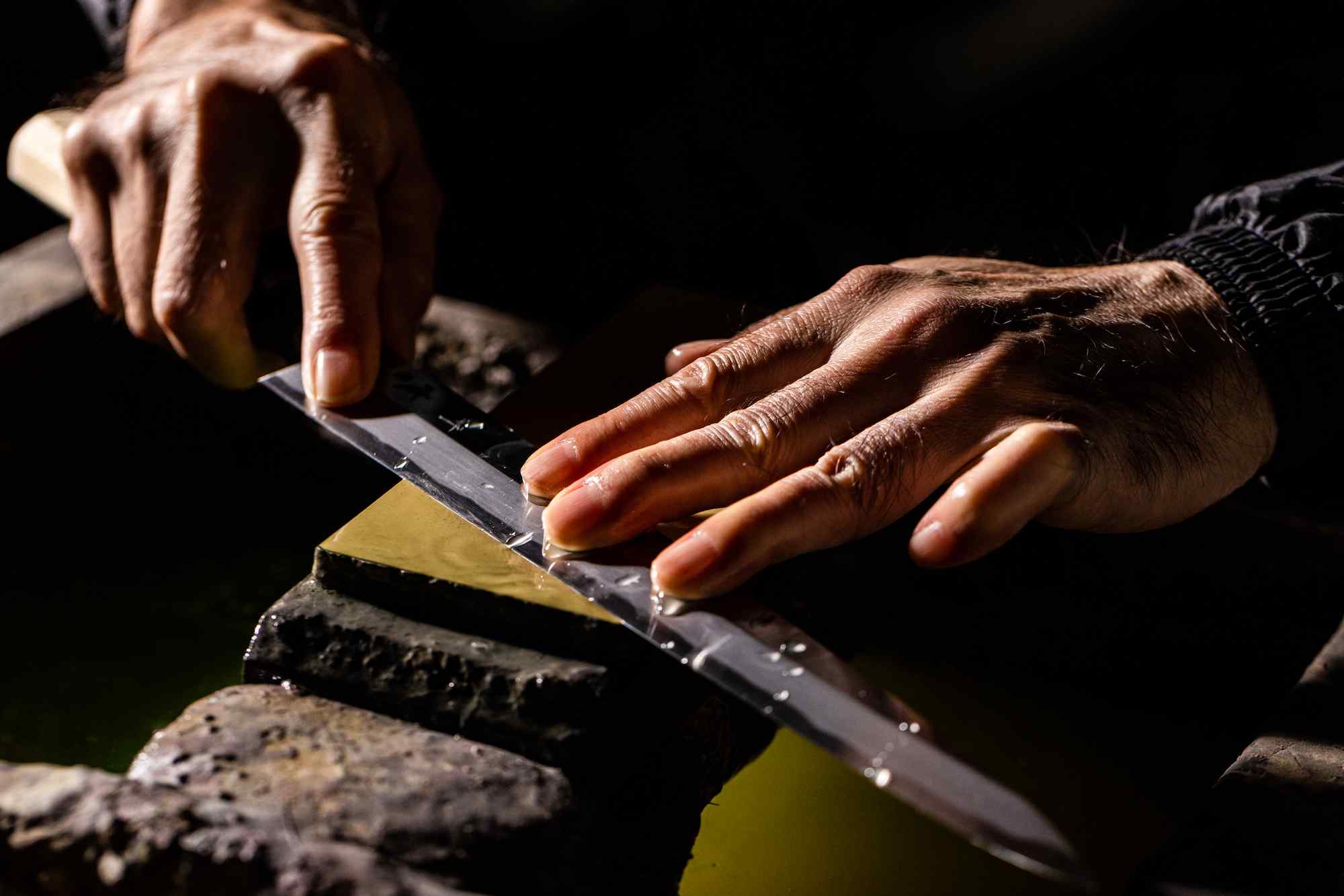
Knife sharpness is of great importance to both professional chefs and culinary enthusiasts. A sharp knife not only makes food preparation easier but also increases safety. However, maintaining the sharpness of a knife requires regular maintenance. One of the most important steps in this maintenance process is staking. So, what is staking and why is it necessary?
What is Knife Sharpening and Stitching?
Knife sharpening is the process of sharpening a knife using abrasive surfaces. It's usually done with whetstones and is necessary to re-sharpen dull knives. However, sharpening alone isn't enough. That's where staking comes in.
Stropping is a process that corrects microscopic irregularities in the cutting edge of a knife, resulting in a sharper and smoother surface. This process is usually achieved using stropping leather or special compounds applied to the leather.
Why is strapping important?
- Extends Sharpness: Gripping slows down the dulling process of the blade, allowing it to stay sharp for longer.
- Removes Microburrs: Microscopic burrs formed after sharpening are smoothed out by belt grinding.
- Provides More Precise Cutting: Especially in jobs requiring precise cutting, belting allows you to achieve a smooth and sharp surface.
- Extends the life of your knife: Instead of frequent sharpening, regular slashing will help you use your knife in good condition for longer.
How is strapping done?
You can follow these steps for the strapping process:
- Choose the Right Leather Strap: For good strapping performance, you need to use a quality leather strap. Cowhide or specially treated straps are generally preferred.
- Secure the strap: Secure your strap to a flat surface or use a buckle to hold it taut.
- Slide the blade at the correct angle: Place the angled end of the blade (the angle should be approximately 15-20 degrees) onto the strap and move it so that the sharp edge is at the front.
- Apply in One Direction Only: Unlike sharpening, when staking, slide the blade backward, avoiding rubbing the cutting surface against the staking.
- Repeat Regularly: Sharpening your blade after each use, or every few uses, will help keep it sharp for longer.
Materials that can be used for strapping.
- Plain Leather Strap: This is the simplest and most commonly used type of strap.
- Compound Belts: Belts containing added chromium oxide or diamond particles offer a more effective belting process.
- Leather strap over wooden board: Preferred because it provides a more stable surface.
Conclusion
Sharpening alone isn't enough to keep your knives sharp for a long time. Sterning extends the life of your blade while also helping you get the best performance. By choosing a good leather stern and applying the correct techniques, you can keep your knives in top condition at all times. If you own high-quality knives, such as Japanese kitchen knives, regular sterning will help maintain their sharpness at the highest level.
Establishing a good knife care routine will increase your productivity in the kitchen. You too can enjoy the sharpness of your knives by discovering the most suitable staking method!

Share:
Chef's Knife Sharpening: Hand Sharpening or Factory Sharpening?
Sharpening Steel Usage: Correct Techniques and Their Effects on the Knife