
A sharp knife makes a huge difference in terms of efficiency and precision in the kitchen. Japanese chef's knives, in particular, are known for their fine craftsmanship and sharpness. So, when choosing one of the highest quality knife brands, what should the sharpening method be? Does hand sharpening or factory sharpening yield better results? In this article, we'll discuss the advantages and disadvantages of both methods to help you make the best choice.
What is Hand Sharpening?
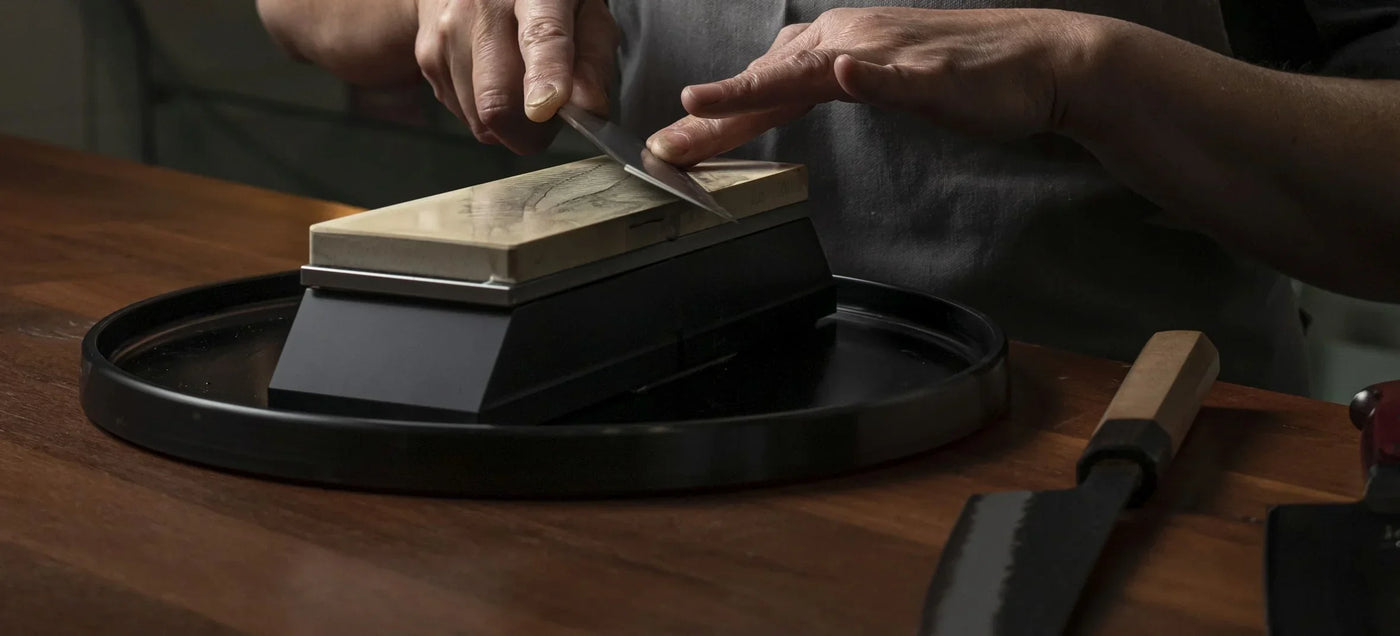
Hand sharpening is a traditional method of sharpening a knife using whetstones or specialized sharpening systems. It is typically performed by masters or experienced chefs.
Advantages:
- Sharpness Control: Customized sharpness can be achieved according to the blade angle.
- Extended Lifespan: When done correctly, it extends the life of the blade and prevents excessive material loss.
- Smoother Sharpness: Provides a more precise result compared to machine sharpening.
Disadvantages:
- It Requires Time and Experience: Hand sharpening requires the right technique; an incorrect procedure can disrupt the blade's balance.
- Regular maintenance is essential: Knives that haven't been used for a long time require regular sharpening.
What is Factory Sharpening?
Factory sharpening is the sharpening process performed by machines during the production phase. A standard sharpening angle is established for mass-produced knives.
Advantages:
- Consistent Sharpness: Sharpening at the same angle is ensured in mass production.
- Less Time Spent: The user can use a sharp knife directly without having to deal with the sharpening process.
- Ideal for Beginners: Factory-sharp knives are practical for new knife users.
Disadvantages:
- Standard Sharpness Angle: Cannot be customized according to personal preferences.
- Rapid Dullness: It can quickly lose its initial sharpness and may require frequent sharpening.
Which method gives more accurate results?
If you own a high-quality knife like a Japanese chef's knife, hand sharpening will result in a sharper and more durable blade in the long run. This is because hand sharpening optimizes the blade's angle and sharpness level to suit individual needs. However, if you're looking for practical use and have no experience with sharpening, factory sharpening may suffice as a starting point.
Conclusion
If you want your chef's knife to perform at its best for many years, hand sharpening is the best method. Given the fine craftsmanship and sharpness of Japanese chef's knives, hand sharpening with professional sharpening stones is the most appropriate choice for the highest quality knife brands. If you lack experience with hand sharpening, seeking professional help or learning to use high-quality sharpening stones would be the best option.