
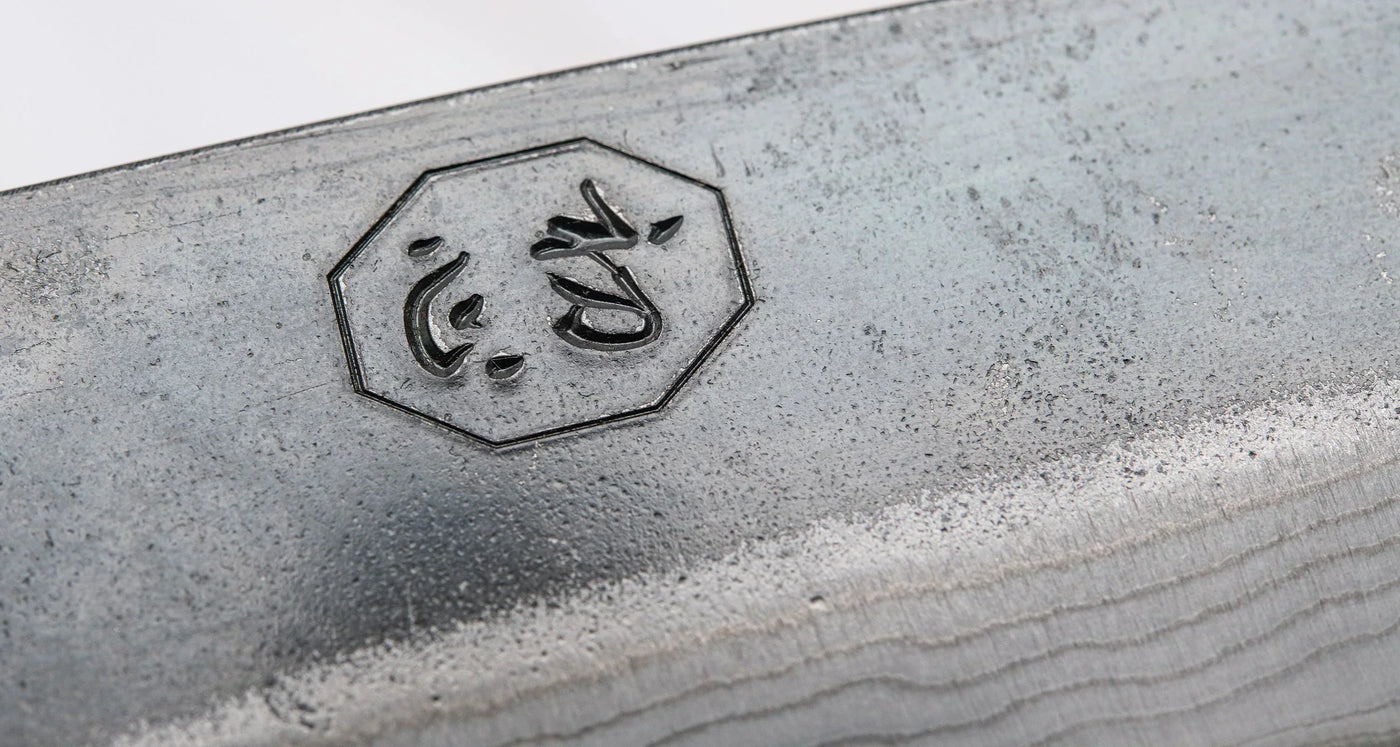
The part of a chef's knife that really does the work is the tip of the blade, that is, the layer of cutting steel.
While attention should be paid to the balance, weight, size, and sharpening angle of the knife, the quality of the steel used is also of great importance. So which steel is best? Is ZDP-189 worth the price? Is VG-10 really good? Carbon steel or stainless steel?
Each type of steel has its own advantages and disadvantages, but a quality knife is always based on good steel.
Generally, the knife steels used by Japanese craftsmen fall into 3 main groups:
- Traditional High Carbon (Non-Stainless Steel) Steels: Aogami, Shirogami
- Stainless Steels: VG-10, AUS-10, Ginsan
- Stainless Steels Produced by Powder Metallurgy: ZDP-189, SG2/R2, HAP40
Let's examine each of these steels in detail:
Carbon Steels
Japanese craftsmen often prefer these types of carbon steels, which do not contain stainless steel, in traditional knife making. It is a very popular choice due to its ability to achieve high hardness, maintain sharpness for a long time, and offer exceptional sharpness.
However, it is more delicate than stainless steel and prone to rusting and staining, so it should be dried immediately after use. Also, when in contact with some foods (such as onions and potatoes), it can cause discoloration due to oxidation.
Shirogami (White Steel)
Shirogami, meaning "White Paper Steel," is known for its purity and incredible sharpness. It contains small amounts of phosphorus and sulfur, but no additional alloying elements.
Shirogami 1
- Hardness: Up to 65 HRC
- Carbon: 1.25% - 1.35%
- Manganese: 0.20% - 0.30%
- Shirogami 2
- Hardness: Up to 61 HRC
- Carbon: 1% - 1.15%
- Manganese: 0.20% - 0.30%
Aogami (Blue Steel)
Aogami, or "Blue Paper Steel," contains more carbon, tungsten, and chromium than Shirogami. This allows it to retain its sharpness longer and be slightly more resistant to rust.
- Aogami 1: Hardness up to 65 HRC.
- Aogami 2: Hardness up to 63 HRC.
- Aogami Super: Hardness up to 65 HRC, additionally contains molybdenum and vanadium.
Stainless Steels
Unlike carbon steels, stainless steels contain more than 12% chromium, making them resistant to oxidation and rust. However, their hardness is generally lower than carbon steels, so they can lose their sharpness more quickly.
The most common Japanese stainless steels are VG-10, AUS-10 , and Ginsan .
VG-10
- Hardness: 60-61 HRC
- Carbon: 0.95% - 1.15%
- Chromium: 14.5% - 15.5%
AUS-10
- Hardness: Up to 60 HRC
- Carbon: 0.95% - 1.10%
- Chromium: 13% - 14.5%
- Ginsan (Pearl Silver Steel)
- Hardness: Up to 63 HRC
- Carbon: 0.92% - 1.10%
- Chromium: 13% - 14.5%
Powder Metallurgy Stainless Steels
These steels are the newest generation of advanced steels. Thanks to powder metallurgy, the high hardness and sharpness of carbon steels are combined with the durability of stainless steels.
SG2/R2
- Hardness: Up to 64 HRC
- Carbon: 1.25% - 1.45%
- Chromium: 14% - 16%
ZDP-189
- Hardness: Up to 67 HRC
- Carbon: 3.00%
- Chromium: 20.00%
- HAP40
- Hardness: Up to 68 HRC
- Carbon: 1.27% - 1.37%
- Cobalt: 7.5% - 8.5%
Conclusion
Which knife steel to choose depends on your usage habits and how much care you give your knife. Carbon steels excel at sharpness, while stainless steels offer ease of maintenance. Powder metallurgy steels are ideal for those who demand top-level performance.