
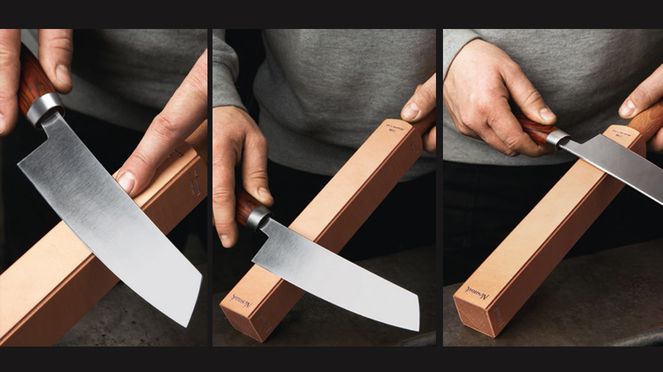
Sharpening Steel Usage: Correct Techniques and Their Effects on the Knife
Maintaining the sharpness of your knives is crucial for efficient and safe use in the kitchen. A dull knife can make cutting more difficult and increase the risk of accidents. This is where using a sharpening steel plays a significant role. So, how do you use a sharpening steel, and can using it incorrectly damage a knife? Here are the details.
What is a whetstone?
A sharpening steel is a tool, made of steel, ceramic, or diamond-coated material, used to maintain the sharpness of knives. However, instead of sharpening the blade, a sharpening steel restores sharpness by reshaping the edge. Therefore, regular use of a sharpening steel helps extend the life of the knife and maintain its sharpness for a long time.
How to use a sharpening steel?
Using a sharpening steel correctly prevents damage to your knife and helps you get the best performance. Here's a step-by-step guide to using a sharpening steel:
- Determine the Correct Angle: Depending on the type of blade, the angle of contact with the cutting surface can vary. Generally, an angle of 10-15 degrees is ideal for Japanese knives, while 20 degrees is ideal for Western-style knives.
- Secure the Tendering Bar: Place the tendering bar upright on a non-slip surface or lean it against a sturdy surface.
- Slide the knife across the sharpening steel with light pressure: Gently touch the blade to the sharpening steel at the designated angle and slide it from top to bottom. Repeat the same movement for the other side of the knife.
- Repeat with steady movements: Restore the sharpness of the blade by repeating the process 5-10 times for both sides.
- Clean the blade: After sharpening, wipe the blade with a damp cloth to remove any metal particles.
Does Masat Damage the Knife?
When used with the correct techniques, a sharpening steel will not damage the knife; on the contrary, it will prolong its life. However, incorrect use can lead to some negative consequences:
- Incorrect Angle Usage: Holding the blade at too wide or too narrow an angle can negatively affect sharpness.
- Applying Excessive Force: Applying too much pressure can cause deformations to the edge of the blade.
- Choosing the wrong sharpening steel: Using a sharpening steel that is not suitable for the steel of the knife can lead to damage to the knife.
Which type of sharpening steel should be chosen?
Choosing the right sharpening steel is important depending on the type of knife you have:
- Steel Sharpening Steel: Suitable for everyday use, but may be too tough for Japanese knives.
- Ceramic Sharpening Steel: Ideal for more delicate knives and for making fine corrections.
- Diamond-coated sharpening steel: Used for harder steel blades, but frequent use can wear down the blade's edge.
Conclusion
A sharpening steel is an essential tool that helps maintain the sharpness of kitchen knives for longer. However, if not used with the correct techniques, it can damage the knife. By choosing the right sharpening steel for your knife and using the correct angle, you can extend the life of your knives. With regular maintenance, you can have a safer and more efficient experience in the kitchen.