
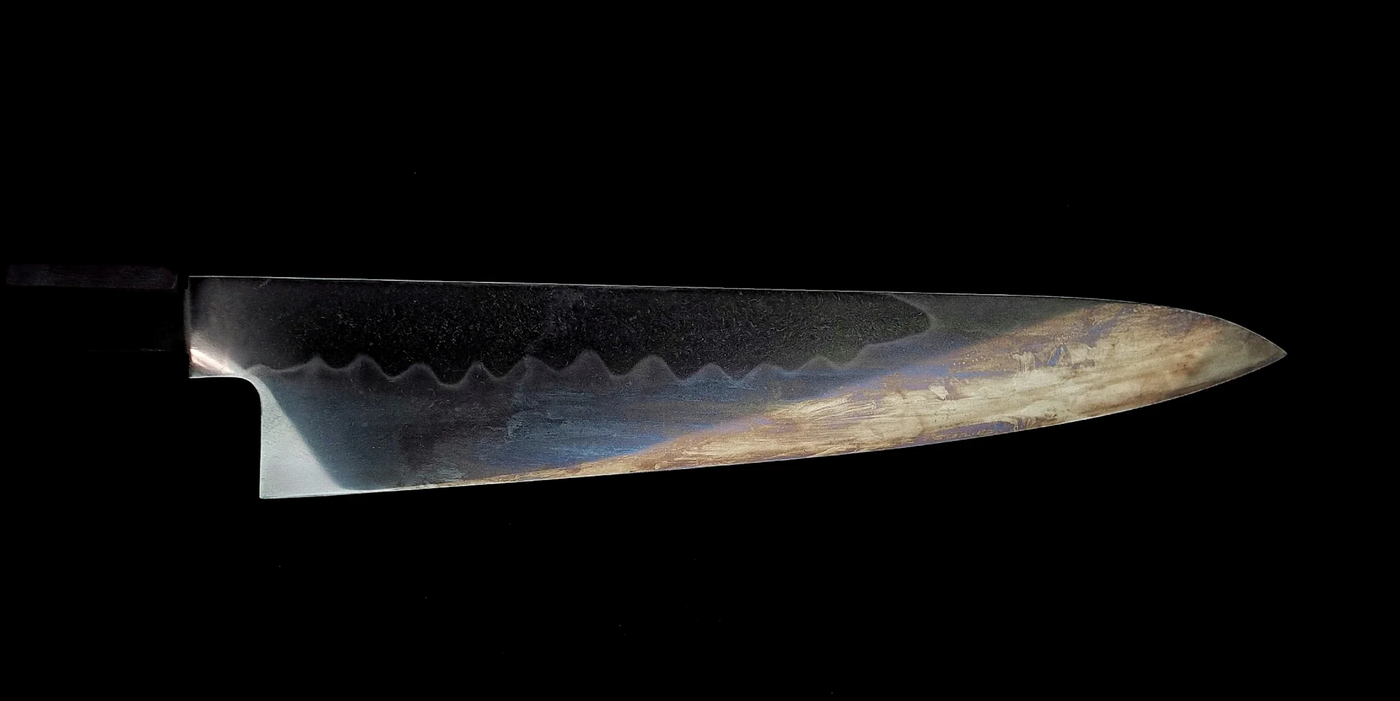
Traditional Japanese steels, due to their low chromium (Cr) content, oxidize and develop a patina with use.
Patina is a natural protective layer that forms on carbon steels, protecting the blade from further oxidation and giving it a characteristic matte appearance. This occurs as a result of the oxidation of the steel's surface, and this process accelerates when the blade comes into contact with various acids. A color change is noticeable during patina formation:
- First, a golden yellow color appears.
- Then this color turns dark blue.
- Then it turns purple.
- Finally, it turns gray and darkens over time.
If you notice red rust stains on your knife, you should clean them immediately.
 What is the difference between patina and rust?
Patina is a thin layer that forms on the surface of oxidized steel and protects the blade from further oxidation.
Patina should not be confused with rust; because while patina protects the blade, rust causes the material to deteriorate.
Rust is generally a brown or reddish layer of iron oxide that forms when iron reacts with water or moisture in the air. Instead of protecting the knife, rust causes further wear and tear and continues to spread in the area where it forms. If you notice rust on your knife, you must clean it before using it.
Which steels develop a patina and which are more susceptible?
Steels are generally divided into three types: carbon steel, stainless steel, and powder metallurgy steel.
Carbon steel refers to knife steels with a high carbon content and low or no chromium content. The most popular Japanese carbon steels include:
- Shirogami (White Paper Steel)
- Aogami (Blue Paper Steel)
- SUJ2, SKS93
The most sensitive of these is Shirogami, which, because it does not contain chromium, forms a patina quickly and requires extra maintenance. SUJ2 is slightly less sensitive, but still forms a patina relatively quickly. Aogami is the least sensitive carbon steel, as it can contain up to 1.5% chromium.
Stainless steel, containing more than 12% chromium, reacts with oxygen to form a passive layer that protects against oxidation and rust.
Powder Metallurgical Steels: While some of these steels contain sufficient chromium in their alloys to qualify as stainless, others have a lower chromium content and are prone to patina formation (HAP-40, 4.70% Cr).