
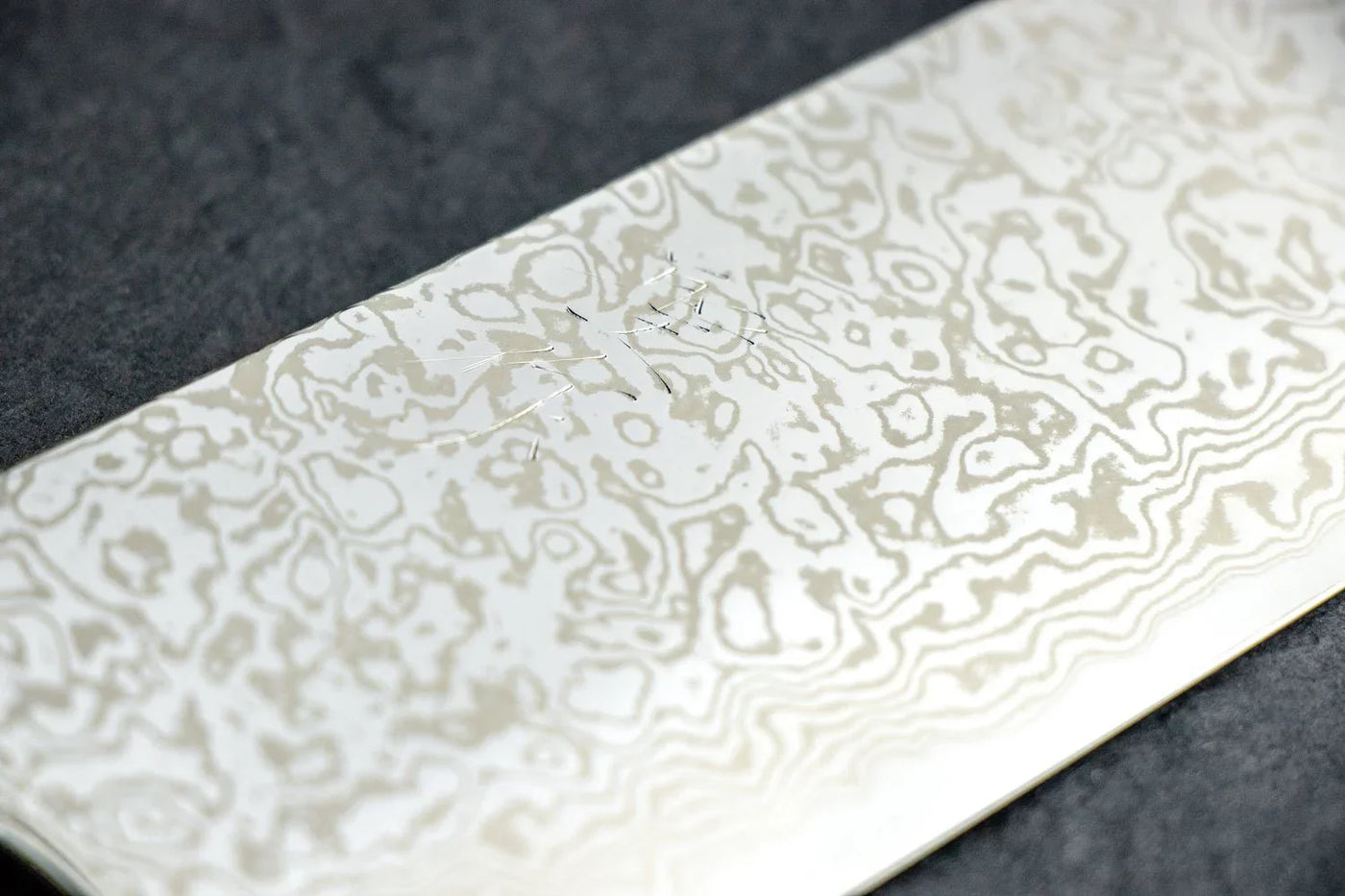
Among chef's knives, one of the most notable is made of Damascus steel. These are knives. Distinguished by both their unique patterns and superior sharpness, these knives combine aesthetics and functionality, especially among Japanese chef's knives . However, Damascus steel is often used for lamination (coating) rather than being used entirely in the blade itself. So, what is Damascus steel and how is it used in Japanese chef's knives?
What is Damascus Steel?
Damascus steel is a type of steel that has been produced throughout history by forging layers of different types of steel together. Obtained through traditional production techniques, this steel is known for its wavy and eye-catching patterns. In modern production, it is manufactured by combining different types of steel, offering both visual and structural advantages.
The Use of Damascus Steel in Japanese Chef's Knives
In Japanese chef's knives, Damascus steel is often used as a lamination layer. In most traditional Japanese knives, while the core steel, which provides the blade's sharpness, is made from a different material, Damascus steel is applied as the outer layer.
Core steel (center steel) is generally composed of the following materials:
- Special carbon steels (e.g., Shirogami, Aogami, Super Blue)
- HSS (High-Speed Steel) steels (e.g., SG2, ZDP-189)
- High-quality stainless steels (e.g., VG-10, R2)
Damascus steel surrounds this hard, high-performance core steel, providing both aesthetic appeal and added durability. This structure is shaped using different lamination techniques such as san-mai (three layers), ni-mai (two layers), or mosaic Damascus .
Advantages of Damascus Knives
- Aesthetic Appearance: Unique patterns add an artistic touch to the knives.
- Protective Layer: Protects the core steel from external factors, increasing the blade's durability.
- Flexibility and Strength: Lamination makes the blade more robust.
Damascus Knife Care
- If the core steel is carbon steel, it should be dried immediately after use.
- The sharpness should be maintained regularly with a whetstone or sharpening steel.
- It should not be left in a humid environment for a long time.
Conclusion
Damascus steel in Japanese chef's knives offers an aesthetically pleasing design without compromising functionality. However, it's important to remember that the core steel is what truly determines the knife's performance. Visit iyibicak.com to explore our collection of high-quality Japanese chef's knives !