Yoshihiro
Gyuto
ÇelikGinsan
Boy210mm

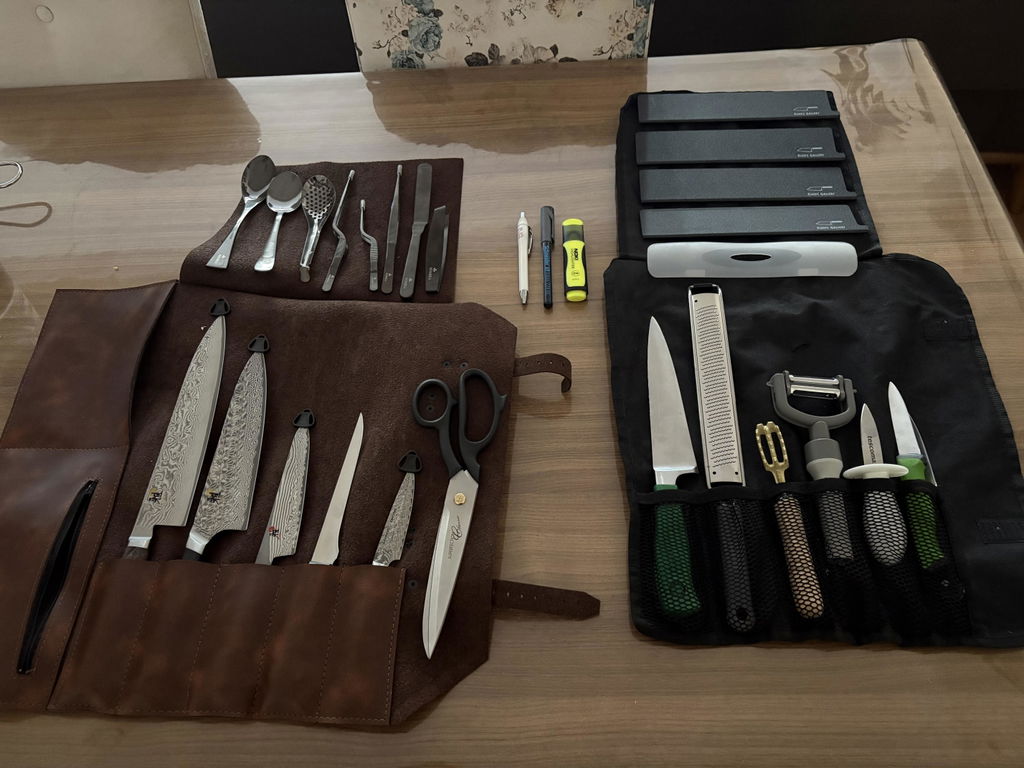
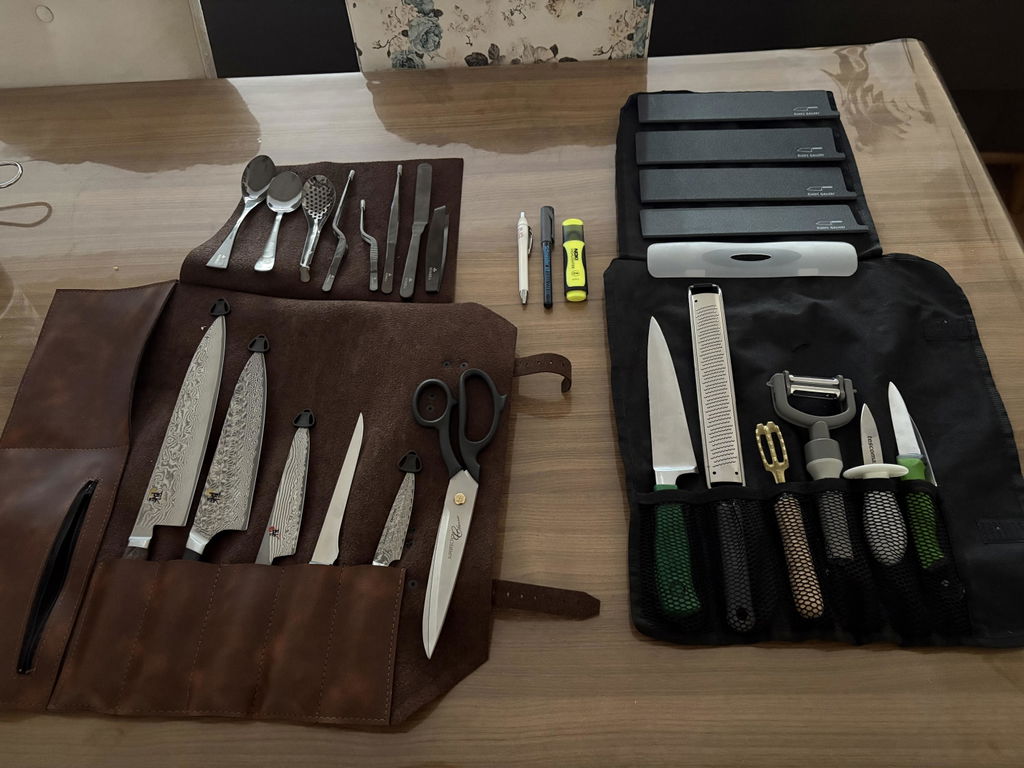
San Mai (三枚) means "three layers" in Japanese, and this lamination method involves using a hard steel core in the blade while coating the outer layers with softer, more flexible steel. This method is one of the most popular Japanese knife-making techniques, combining sharpness and durability.
Core Steel (Hagane): This is the central layer that forms the cutting edge of the blade. High-carbon steels such as Shirogami (White Steel), Aogami (Blue Steel), or stainless steel types are typically used. This layer provides superior sharpness and hardness.
Outer Layers (Jigane): A softer steel or stainless steel is used. These layers make the blade more resistant to impacts and reduce brittleness. They can also help make the blade more resistant to rust.
These three layers are fused together by forging at high temperatures, and then brought to their final form through traditional forging, grinding, and polishing processes.
Yoshihiro


Yoshihiro


Yoshihiro


Yoshihiro


Yoshihiro


Muneishi Hamono


Tsunehisa Hamono


Tsunehisa Hamono


Tsunehisa Hamono


Tsunehisa Hamono


Hatsukokoro


Nigara Hamono


Tsutomu Kajiwara


Tsutomu Kajiwara


Tsunehisa Hamono


Isamitsu


Isamitsu


Isamitsu


Tsunehisa Hamono


Tsunehisa Hamono


Tsunehisa Hamono


Tsunehisa Hamono


Tsunehisa Hamono


Tsunehisa Hamono