


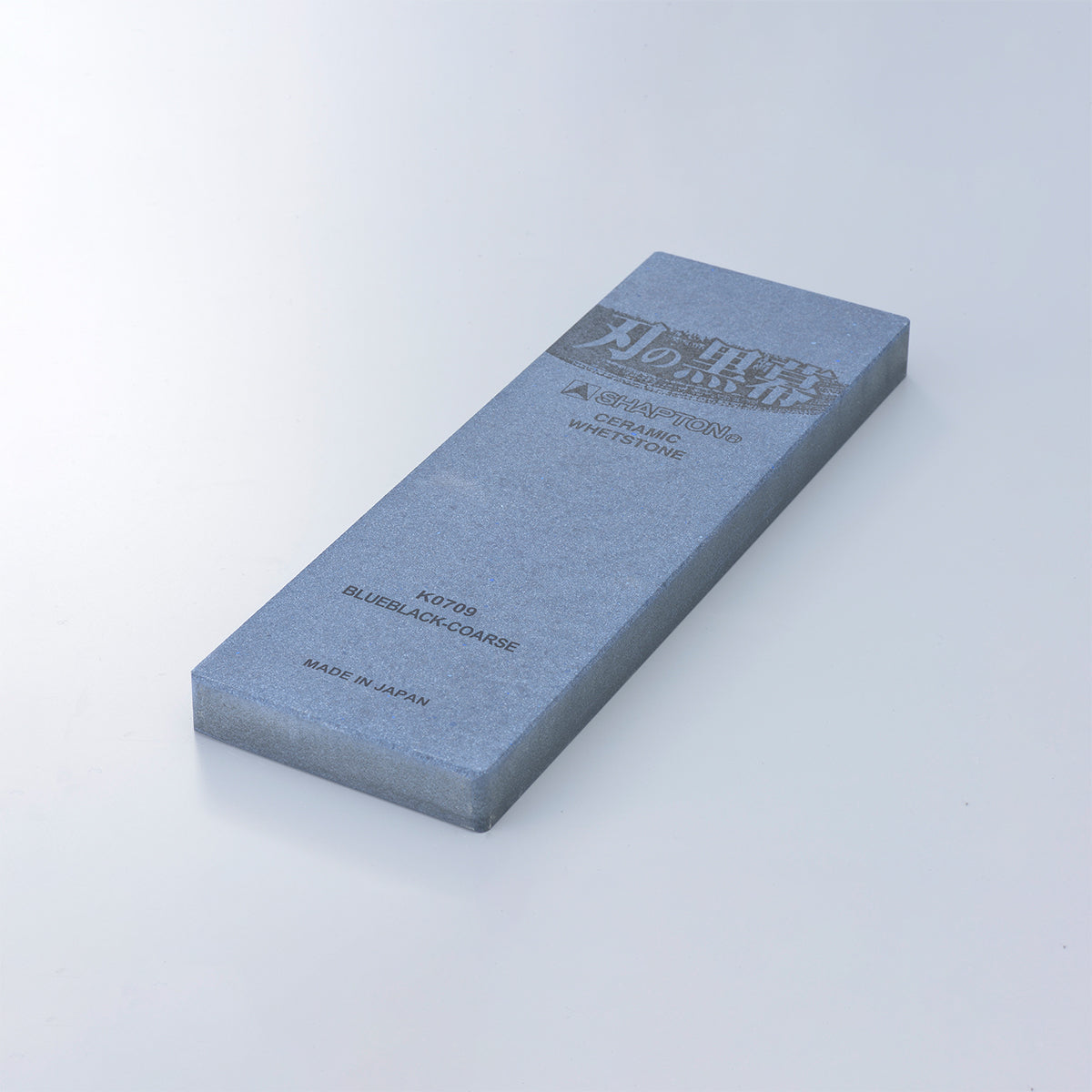
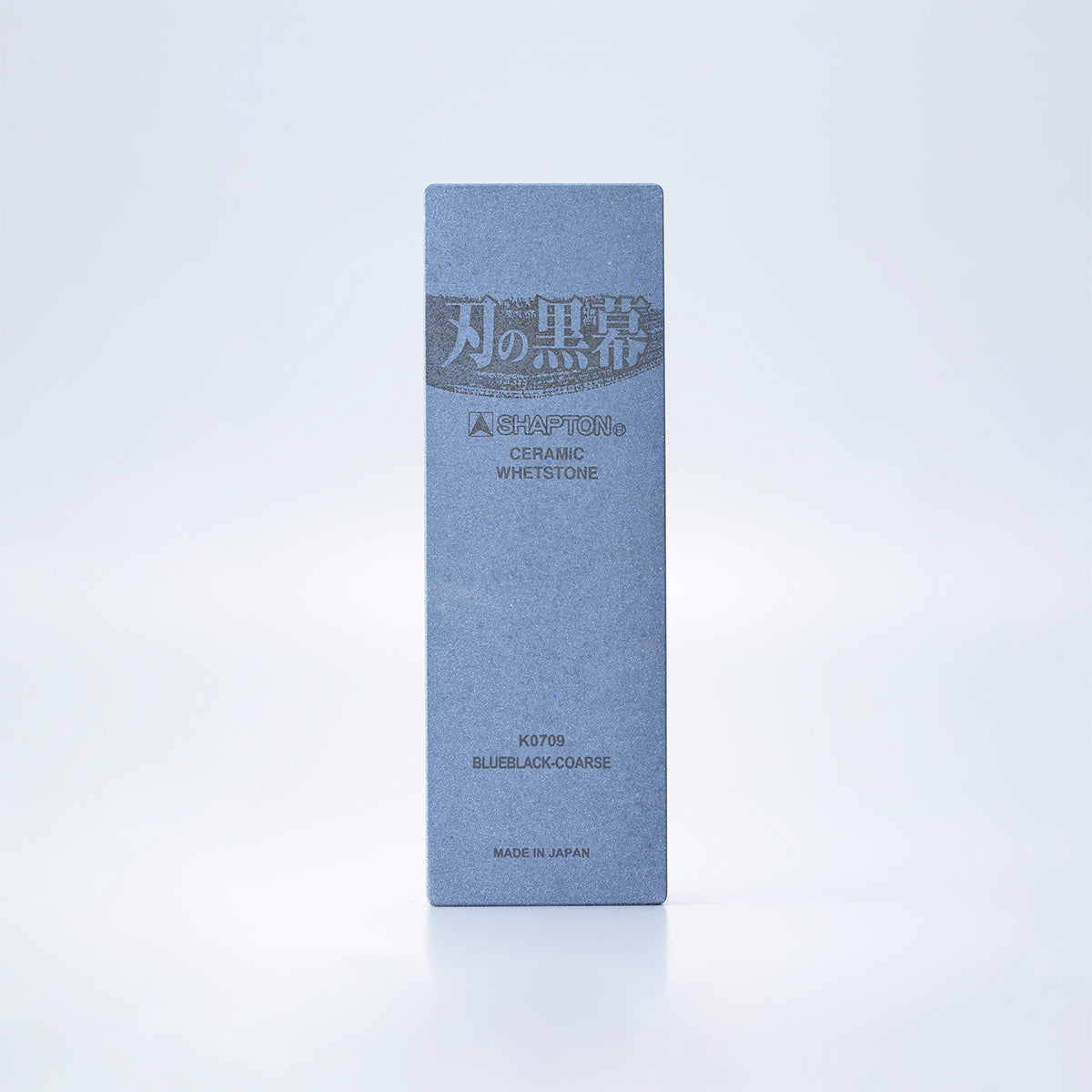
Shapton Kuromaku Sharpening Stone - #320 Blue/Black
Shapton Whetstone — ToishiThe Shapton Kuromaku #320 Blue/Black is the coarsest stone in the Kuromaku series and handles the "restoration" phase of the sharpening process. The Blue/Black color combination defines the most aggressive stone in the series. This stone comes into play for bringing broken, deeply chipped, or incorrectly angled knives back to life; or for giving a new knife a different edge geometry.
Kuromaku #320: The Strongest Link in the Series
The Kuromaku series is generally known for its fineness and precision; however, the #320 shows a different side of this series. Its resin binder technology provides controlled and predictable metal removal even at this coarse grit level. A common problem encountered with coarse stones from other brands – uneven wear of the stone and rapid degradation of the surface – is minimized in Kuromaku's formulation. The Blue/Black color code is the code for the #320 grit within Kuromaku.
#320 Grit: When to Use It?
This stone is not used in every sharpening session. The situations in which it is used are:
- There are chips or deep nicks on the knife's edge
- The knife's edge has been sharpened at the wrong angle and needs to be completely reset
- Knives that have been used for a long time and are excessively dull
- A new knife needs a different edge angle (e.g., from 20° to 15°)
- A traditional double-beveled (symmetric) knife is to be converted to a single-beveled (asymmetric) geometry
After #320, the chain of #1000 → #3000 → #5000 → #8000 must be followed. This stone alone will never provide sufficient sharpness; its purpose is to shape the edge and repair damage.
Technical Specifications
- Grit: #320
- Color code: Blue/Black (Kuromaku's coarsest stone)
- Binder: Shapton patented resin (vitrified bond)
- Abrasive: Aluminum oxide
- Water requirement: A few drops – no pre-soaking needed
- Metal removal: Very high
- Function: Restoration / reshaping / angle change
- Compatibility: All steel types
Who is it suitable for?
It is designed for knifemakers, enthusiasts interested in restoring second-hand knives, kitchen equipment repairers, and advanced users who want to fundamentally renew their knives. For home users, this stone is also extremely useful during the annual "major maintenance" of knives – especially for compensating for accumulated neglect.
Usage Tips
- You can apply more pressure to this stone – coarse grit can handle it
- Do not switch to the other side before completely finishing one side; observe burr formation along the edge
- Regularly check the flatness of the stone – coarse stones dish faster
- Before moving from #320 to #1000, examine the coarse scratches on the edge under light; all nicks should be gone
- Use the stone with plenty of water – if too much metal dust accumulates, efficiency decreases
Care and Storage
Coarse stones are the ones that accumulate the most metal dust. Clean and rinse thoroughly with a brush after each use. Regularly flatten the stone's surface with coarse lapping powder – the #320 dishes faster than other stones. A clean and flat #320 stone can handle the toughest restoration tasks for decades.
Shipping Information
Orders placed by 2 PM are shipped the same day. Free shipping on orders over ₺1,000. Sharpening stones are sent in special protective foam packaging.
Returns & Exchanges
30-day unconditional return guarantee. The product must be in its original packaging and unused. If a manufacturing defect is found in the stone, an exchange will be made without a time limit.
Stone Care
After use, wash the stone with warm water and allow it to air dry. If the stone surface becomes uneven (dishing), correct it with a flattening stone. Protect the stone from direct sunlight and frost.


What is Grit? Which Stone Should I Choose?
Grit number indicates the abrasive grain density of the stone. A low number means coarser (fast material removal), and a high number means finer (polishing and finishing).
Technical
How to Know?
Sharpening with a Japanese whetstone involves 5 fundamental steps. When you correctly follow each step, your knife will return to its factory sharpness.
-
 Name 1
Soak the Stone
FloodedSubmerge the stone in clean water and wait until air bubbles completely stop. This can take between 5-15 minutes, depending on the type of stone.
Tip: Important: Do not soak splash-and-go type stones (like Shapton Pro) in water — just wet the surface. -
 Name 2
Adjust the Angle
Angle SettingPlace the knife against the stone at approximately a 15° angle. Hold the knife steady by applying light pressure to the blade surface with your index and middle fingers.
Tip: Easy method: Lay the knife flat on the stone, then lift the spine by the thickness of two coins — this is approximately 15°. -
 Name 3
Sharpen
To honeSlide the blade back and forth along the stone. Divide the blade into 3 sections from tip to heel and apply 20-30 strokes to each section.
Tip: Pressure: Light pressure on the forward stroke, no pressure on the backward stroke. The stone's own abrasiveness is sufficient. -
 Name 4
Finishing & Washing
Clean up the burrs on both sides with a few light strokes. Wash the blade with warm water and dry it. Also wash the stone and let it air dry.
Tip: Test: Hold a sheet of paper in the air and cut it — if it cuts cleanly and smoothly, the sharpening was successful.


Which knives is it used on?
Steel Types
- VG-10 (Stainless)The most common Japanese steel — excellent conformity
- Aogami Super (Carbon)High carbon — fast and effective sharpening
- SG2/R2 (Powder Metallurgy)Hard steel requires patient grinding
- German Steel (X50CrMoV15)Mild steel — sharpens very quickly
- Ceramic KnifeDiamond requires a stone — aquamarine is not suitable
Types of Knives
- Gyuto (Chef's Knife)210mm and above — fully compatible
- Santoku170mm — this is the ideal size for this stone
- Nakiri (Vegetable)Straight edge — easy sharpening
- Petty (Theft)Small knife — precise sharpening
- Serrated Bread KnifeIt can't be sharpened with a flat stone — it needs a special rod-shaped stone.
Suggested Sharpening Angles
- 10-12° Yanagiba / Sashimi
- 15° Japanese KnivesÖnerilen
- 20° Western / German Knives
Give Your Knives the Care They Deserve
Japanese water stone technology, trusted by professional chefs, now in your kitchen.
Frequently Asked Questions
Siparişim ne zaman kargolanır?
Hafta içi saat 14:00'e kadar verilen siparişler aynı gün kargoya teslim edilir. 14:00 sonrası verilen siparişler ise bir sonraki iş gününde kargolanır.
Hafta sonu ve resmi tatillerde verilen siparişler ilk iş gününde hazırlanarak kargoya teslim edilir.
Her bıçağı göndermeden önce son kez kontrol ediyor ve güvenli şekilde paketliyoruz. Bu nedenle yoğun dönemlerde kargoya çıkış süresinde kısa gecikmeler yaşanabilir.
Türkiye içi kargo ücreti ve süresi nedir?
2.500 TL ve üzeri siparişlerde kargo ücretsizdir. Bu tutarın altındaki siparişlerde sabit 120 TL kargo ücreti uygulanır.
Siparişleriniz anlaşmalı kargo firmamız aracılığıyla genellikle 1–2 iş günü içerisinde teslim edilir. Çoğu sipariş ertesi gün alıcısına ulaşır. Uzak bölgelerde teslimat süresi 1 iş günü kadar uzayabilir.
Stokta olmayan bıçaklar ne zaman gelir?
Ürünlerimizin büyük bölümü Japonya'daki küçük atölyelerde ve sınırlı adetlerde üretilmektedir. Bu nedenle her model her zaman stokta bulunmayabilir.
Bir ürün tükendiğinde yeniden tedarik süresi modele, üreticiye ve atölyenin üretim programına göre değişiklik gösterir. Bu nedenle kesin bir stok tarihi veremiyoruz. Ayrıca tükenen her modelin yeniden üretileceğini de garanti edemiyoruz. Bazı modeller dönemsel olarak üretilirken, bazıları ustanın üretimi bırakması veya emekli olması nedeniyle kalıcı olarak sona erebilir.
Son yıllarda el yapımı Japon bıçaklarına olan talep dünya genelinde hızla artarken, geleneksel yöntemlerle üretim yapan usta sayısı azalmaktadır. Üretim tamamen el emeğine dayandığı için bazı modeller uzun süre temin edilemeyebilir veya kalıcı olarak üretimden kalkabilir.
İlgilendiğiniz bir ürün stokta yoksa bizimle iletişime geçebilirsiniz. Mümkün olduğunda yeniden stok bilgisi paylaşır ve sizi öncelikli olarak bilgilendiririz.
Sipariş durumumu nasıl takip ederim?
Siparişiniz kargoya teslim edildiğinde takip numaranızı içeren bir e-posta gönderilir.
Ayrıca hesabınızdaki "Siparişlerim" bölümünden siparişinizin güncel durumunu takip edebilirsiniz. Herhangi bir sorun yaşamanız halinde bizimle iletişime geçmeniz yeterlidir.
Hangi bıçak benim için uygun?
Doğru bıçak; ne sıklıkla yemek yaptığınıza, hangi malzemeleri hazırladığınıza ve bakım için ne kadar zaman ayırmak istediğinize bağlıdır.
Çok amaçlı kullanım için Gyuto (şef bıçağı) veya Santoku, sebze ağırlıklı mutfaklar için ise Nakiri harika başlangıç seçenekleridir.
Kararsızsanız bıçak seçim testimizi kullanabilir veya bizimle iletişime geçebilirsiniz.
İlk Japon bıçağım için hangisini önerirsiniz?
Çoğu kullanıcı için 210 mm Gyuto veya 165–180 mm Santoku en doğru başlangıç noktasıdır.
Paslanmaz çelik tercih ediyorsanız VG10 veya SG2 çelikli modeller, kullanım kolaylığı ve performans dengesi açısından en güvenli seçeneklerdir. Emin değilseniz kullanım alışkanlıklarınıza göre size uygun modeller önermekten memnuniyet duyarız.
VG10, SG2, Aogami ve Shirogami arasındaki fark nedir?
Bunlar farklı çelik aileleridir ve her biri keskinlik, dayanıklılık ve bakım gereksinimi açısından farklı özellikler sunar.
- VG10 — Paslanmaz, dengeli ve kullanımı kolaydır. İlk Japon bıçağı için ideal seçimdir.
- SG2 / R2 — Toz metalürjisiyle üretilen yüksek performanslı paslanmaz çeliktir. Uzun süre keskin kalır.
- Aogami (Mavi Kağıt) — Karbon çeliktir. Çok yüksek keskinlik sunar ancak düzenli bakım ister.
- Shirogami (Beyaz Kağıt) — En saf karbon çeliklerden biridir. Olağanüstü keskinlik sağlar ancak paslanmaya karşı daha hassastır.
Daha detaylı bilgi için çelik rehberlerimize göz atabilirsiniz.
Japon bıçakları neden daha pahalıdır?
Japon bıçaklarının önemli bir bölümü küçük atölyelerde, sınırlı adetlerde ve yoğun el işçiliğiyle üretilir.
Kullanılan çelikler daha yüksek sertlik değerlerine sahiptir ve üretim sürecinde çok daha fazla ustalık gerektirir. Sonuç olarak daha uzun süre keskin kalan, daha hassas kesim yapabilen ve yıllarca kullanılabilecek bıçaklar ortaya çıkar.
Fiyat farkının temel nedeni marka değil; kullanılan malzeme, işçilik ve üretim ölçeğidir.
Bıçaklarınız el yapımı mı?
Koleksiyonumuzdaki bıçakların büyük bölümü Japonya'da nesillerdir faaliyet gösteren atölyelerde üretilmektedir. Birçok modelde dövme, taşlama, sap montajı ve son bileme işlemleri ustalar tarafından el işçiliğiyle gerçekleştirilir.
Bu nedenle aynı model içerisinde küçük ölçü, yüzey veya görünüm farklılıkları görmek normaldir. Bunlar kusur değil, el işçiliğinin ve geleneksel üretimin doğal sonucudur.
Her ürün sayfasında üretim yöntemi ve üretici hakkında detaylı bilgi paylaşıyoruz.
HRC sertliği ne anlama gelir?
HRC (Rockwell Sertlik Ölçeği), çeliğin sertliğini ölçmek için kullanılan bir değerdir.
Japon bıçakları genellikle 60–64 HRC aralığında olurken, birçok Batı tipi bıçak 56–58 HRC seviyesindedir.
Yüksek sertlik daha uzun süre keskin kalan bir ağız sağlar ancak çeliğin kırılganlığını da artırabilir. Bu nedenle sertlik tek başına kalite göstergesi değildir; kullanım amacına uygun olması daha önemlidir.
Paslanmaz mı, karbon çelik mi almalıyım?
Paslanmaz çelikler (VG10, SG2 vb.)
- Bakımı kolaydır.
- Paslanmaya karşı dayanıklıdır.
- Günlük kullanım için idealdir.
Karbon çelikler (Aogami, Shirogami vb.)
- Daha yüksek keskinlik potansiyeline sahiptir.
- Bilemesi daha kolaydır.
- Düzenli kurutma ve bakım gerektirir.
- Zamanla patina oluşturur.
Bakımla uğraşmak istemiyorsanız paslanmaz çelik tercih etmenizi öneririz. Bıçağınızla ilgilenmekten keyif alıyorsanız karbon çelik son derece tatmin edici bir seçim olabilir.
Bıçağımı bulaşık makinesinde yıkayabilir miyim?
Hayır.
Yüksek sıcaklık, aşındırıcı deterjanlar ve diğer mutfak ekipmanlarıyla temas; bıçağın ağzına, sapına ve yüzeyine zarar verebilir.
Bıçağınızı kullandıktan sonra elde yıkayın, ardından hemen kurulayın. Bu basit alışkanlık bıçağınızın ömrünü önemli ölçüde uzatacaktır.
Karbon çelik bıçağım neden renk değiştirdi?
Karbon çelik bıçaklarda zamanla oluşan gri, mavi veya koyu tonlardaki renk değişimleri genellikle patina olarak adlandırılır. Bu, çeliğin gıdalar ve hava ile verdiği doğal tepkidir ve çoğu kullanıcı tarafından istenen bir özelliktir.
Turuncu veya kahverengi, pürüzlü lekeler ise pas oluşumuna işaret eder. Bu durum genellikle bıçağın nemli bırakılmasından kaynaklanır.
Kullanımdan sonra bıçağı yıkayıp hemen kurulamak, hem pas oluşumunu önler hem de bıçağın uzun yıllar sağlıklı kalmasını sağlar.
Hangi kesme tahtasını kullanmalıyım?
Ahşap veya tercihen end-grain (dik damarlı) ahşap kesme tahtaları kullanmanızı öneririz.
Cam, taş, mermer, seramik ve sert plastik yüzeyler bıçak ağzını hızla köreltebilir. Keskinliğin korunması için ahşap yüzeyler en güvenli seçenektir.
Bıçağımı nasıl saklamalıyım?
Bıçağınızı başka metal eşyalarla temas etmeyecek şekilde saklamalısınız.
Manyetik duvar şeritleri, bıçak blokları veya saya (kılıf) kullanımı idealdir. Çekmece içinde korumasız şekilde saklamak hem tehlikeli hem de bıçak ağzı için zararlıdır.
Özellikle karbon çelik bıçakları saklamadan önce tamamen kuru olduklarından emin olun.
Masat kullanmalı mıyım?
Masatın uygun olup olmadığı, kullandığınız bıçağın çeliğine bağlıdır.
Geleneksel çelik masatlar; daha yumuşak çeliklerden üretilen Avrupa tipi bıçaklarda ve düşük sertlikteki bazı Japon bıçaklarında oldukça etkili olabilir. Bu tür çeliklerde ağız hizalamasını hızlıca geri kazandırarak keskinlik hissini artırır.
Ancak yüksek sertlikteki Japon bıçaklarında (özellikle 60+ HRC seviyesindeki VG10, SG2, Aogami ve Shirogami çeliklerinde) geleneksel çelik masatlar genellikle önerilmez. Bu bıçaklarda ağıza zarar verebilir veya mikro kırıklara neden olabilir.
Yüksek sertlikteki Japon bıçakları için seramik honlama çubuğu veya ince gritli bir su taşı çok daha güvenli ve etkili seçeneklerdir.
Unutulmaması gereken önemli nokta şudur: Masat bıçağı keskinleştirmez; yalnızca mevcut ağzın hizasını düzeltmeye yardımcı olur. Gerçek keskinlik ise bileme ile elde edilir.
Bıçağımı ne sıklıkta bilemeliyim?
Bu tamamen kullanım sıklığına bağlıdır.
Ev kullanımında çoğu bıçak için birkaç ayda bir bileme yeterlidir. Domates kabuğunu ezmeden kesememeye başladığında veya kesim performansında belirgin düşüş hissettiğinizde bileme zamanı gelmiş demektir.
Hangi bileme taşıyla başlamalıyım?
Yeni başlayanlar için en iyi seçenek #1000 grit su taşıdır.
Bu taş hem düzenli bakım hem de keskinlik yenileme işlemleri için yeterlidir. Daha sonra ihtiyaç duyarsanız #400 grit ve #3000–6000 grit taşlarla setinizi genişletebilirsiniz.
Bileme hizmeti veriyor musunuz?
Evet.
Satın aldığınız bıçaklar için profesyonel bileme hizmeti sunuyoruz. Hizmet detayları ve süreç hakkında bilgi almak için bizimle iletişime geçebilirsiniz.
İade ve değişim koşulları nelerdir?
Kullanılmamış ve orijinal ambalajındaki ürünleri teslim aldıktan sonraki 14 gün içerisinde iade veya değişim talebinde bulunabilirsiniz.
Hijyen ve güvenlik nedeniyle kullanılmış, kesim yapılmış veya yeniden bilenmiş bıçaklarda iade kabul edilemez. Üretim hatası tespit edilmesi durumunda gerekli inceleme yapılarak destek sağlanır.
Bıçaklarda garanti var mı?
Evet. Tüm ürünlerimiz üretim ve malzeme hatalarına karşı garanti kapsamındadır.
Garanti; üretim kaynaklı çatlaklar, sap montaj kusurları veya malzeme hatalarını kapsar. Kullanım kaynaklı hasarlar garanti kapsamında değildir.
Bir durumun garanti kapsamında olup olmadığından emin değilseniz, fotoğraflarla birlikte bizimle iletişime geçebilirsiniz.
Hangi ödeme yöntemlerini kabul ediyorsunuz?
Kredi kartı, banka kartı ve havale/EFT ile ödeme yapabilirsiniz.
Tüm ödemeler güvenli ödeme altyapıları üzerinden gerçekleştirilir ve kart bilgileriniz tarafımızda saklanmaz.
Taksit imkanı var mı?
Evet.
Anlaşmalı bankaların kredi kartlarıyla taksitli ödeme seçeneklerinden yararlanabilirsiniz. Güncel taksit seçenekleri ödeme ekranında görüntülenir.
Bıçaklarınız orijinal mi, doğrudan Japonya'dan mı geliyor?
Evet.
Sattığımız tüm bıçaklar Japonya'daki ustalardan, atölyelerden ve yetkili distribütörlerden doğrudan tedarik edilmektedir.
Bu nedenle her ürünün üreticisini, çeliğini ve üretim yöntemini açıkça paylaşabiliyoruz. Satın aldığınız ürün, ürün sayfasında anlatılan bıçağın ta kendisidir.
Hediye paketi yapıyor musunuz?
Evet.
Sipariş sırasında hediye paketi seçeneğini işaretlemeniz yeterlidir.
Bir Japon bıçağı, doğru seçildiğinde yıllarca kullanılan ve hatırlanan özel bir hediyedir. Bu nedenle siparişlerinizi koruyucu ve şık bir şekilde paketliyor, hediye olarak gönderilecek ürünlere ekstra özen gösteriyoruz.
Is this a Splash & Go stone, or does it require soaking?
The Shapton Kuromaku series is a Splash & Go type. Just sprinkle water on its surface before use; there's no need to immerse it in water. Ensure the surface remains moist during sharpening. This feature offers great convenience compared to traditional stones — you can start using it immediately.
My whetstone has dished, what should I do?
Use a flattening stone. Sharpening stones wear down and become concave over time. This distorts the sharpening angle and prevents even sharpening. Flatten the stone by moving the flattening stone back and forth on a wet surface. Draw a pencil grid — when the lines are completely erased, the stone is flat. Check out our flattening stones.
Is one stone enough, or should I buy a set?
A #1000 grit stone is sufficient to start. For weekly sharpening in a home kitchen, a #1000 grit stone will get the job done. However, if you want to get maximum performance from your kitchen knife, we recommend a #1000 + #3000 grit double set — the first sharpens, the second polishes. For professional use, the #320 + #1000 + #5000 triple set is ideal.
Can this stone also be used with German/Western knives?
Yes, it can be used on all metal knives. It also perfectly sharpens Western knives such as Wüsthof, Zwilling, and Victorinox. The only difference is the sharpening angle: use 15° for Japanese knives and 20° for Western knives. Since German steel is softer, the sharpening time will be shorter.
How should I store and care for the stone?
Wash after use and allow to air dry. Never store the stone wet in a closed box — it may develop mold. Protect from direct sunlight and frost. Shapton Kuromaku stones can be stored in their own plastic cases (the case also doubles as a stone holder). If not to be used for a long time, store in a dry and cool place.
Is a stone holder necessary?
We strongly recommend it for safety. A whetstone slipping during sharpening is both dangerous and reduces the quality of the sharpening. The silicone stone holder keeps the stone stable and protects your countertop from scratches. The plastic case of the Shapton Kuromaku can also be used as a basic holder, but the professional silicone holder provides a much more stable sharpening experience.
Give Your Knives a New Life
Centuries of Japanese waterstone technology, in your hands. More than a stone — an investment in every knife in your kitchen.
Add to Cart — 3.300TL