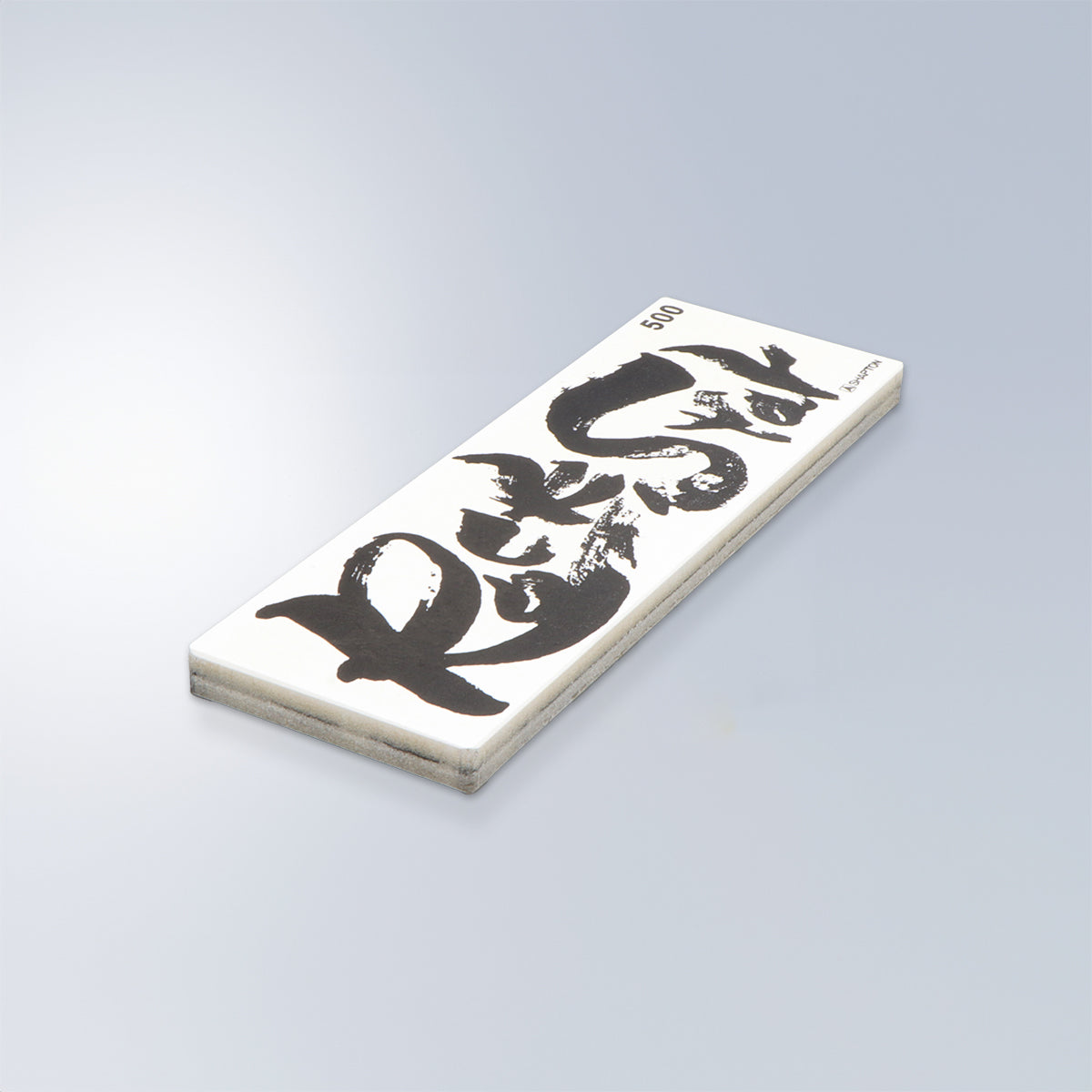
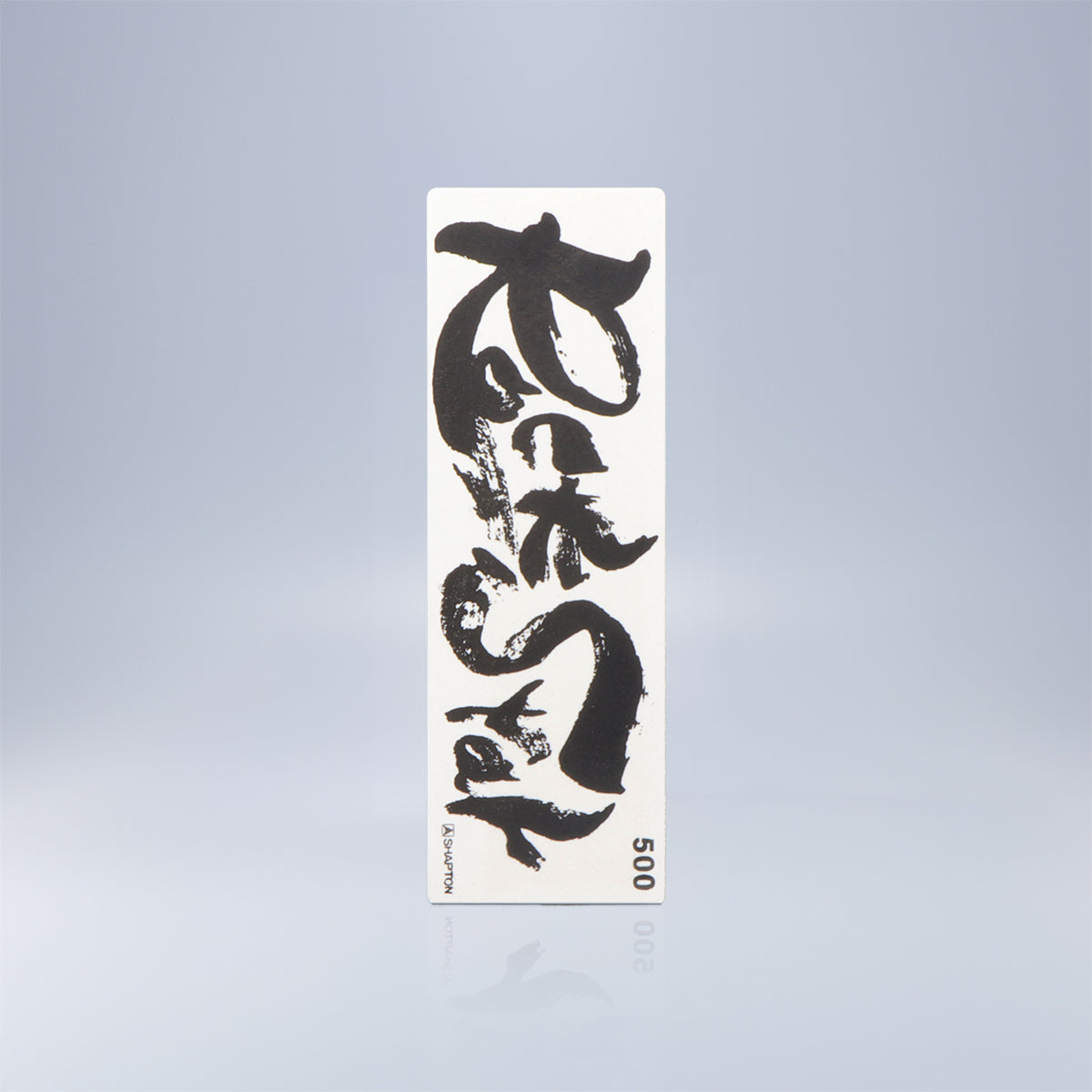
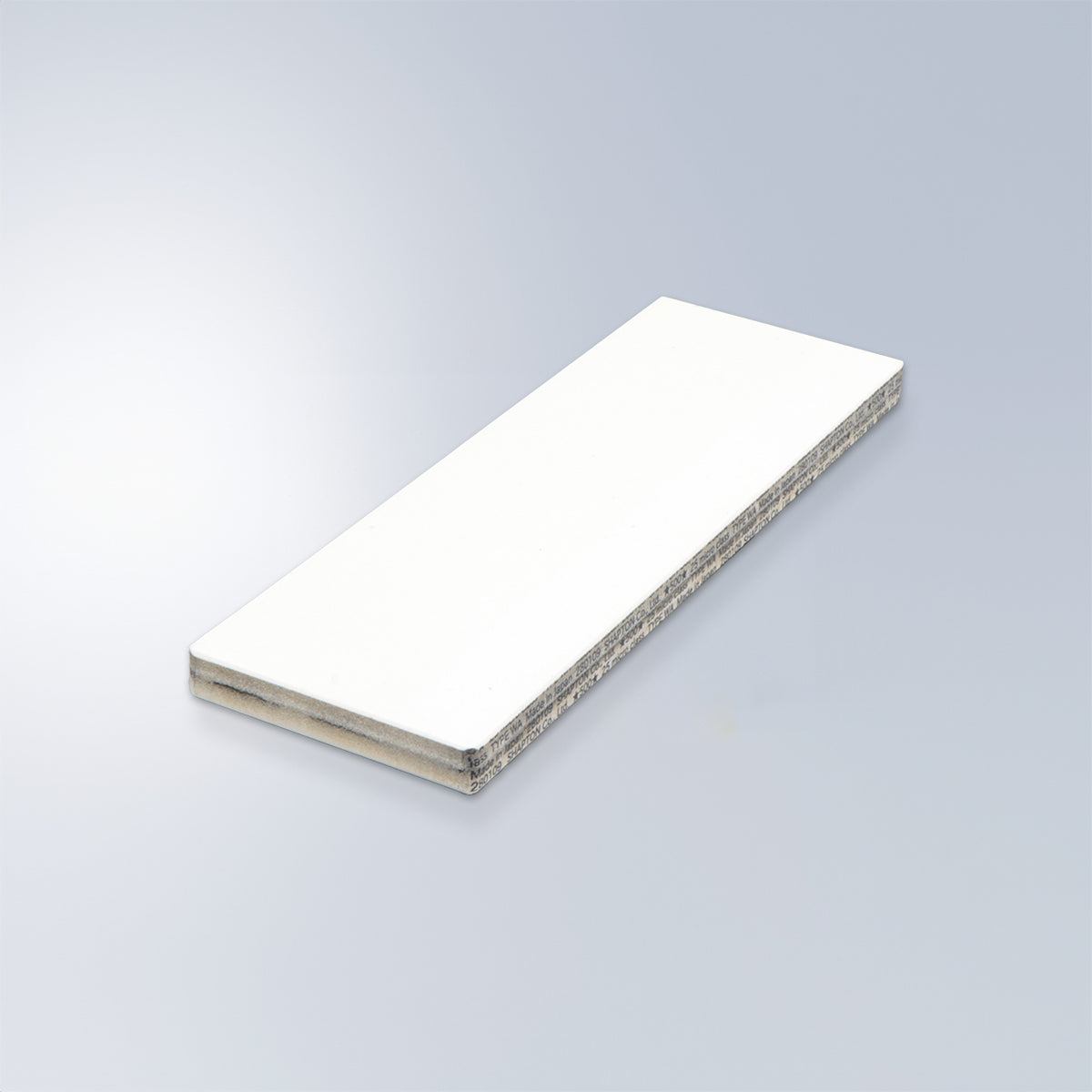
Shapton Rock Star Sharpening Stone - #500
Whetstone — ToishiThe Shapton Rock Star #500 is the coarsest stone in Shapton's Rock Star series. Designed to bring broken, heavily worn, or improperly sharpened knives back to life, this stone handles the "rescue" phase of the sharpening process with its aggressive metal removal capacity.
About the Rock Star Series
The Shapton Rock Star series extends the Kuromaku's philosophy of ease of use to a wider grit range, offering durable and long-lasting stones. Rock Star stones are optimized for intensive professional use, culinary school environments, and knife-making workshops. Their resin binder structure keeps the abrasive particles stable and ensures even wear of the stone. No pre-soaking is required — this feature is a critical advantage in busy work environments.
#500 Grit: Rescue and Reshaping
The #500 grit is the strongest link in your sharpening chain. This stone comes into play in the following situations:
- Knife edge is broken or chipped
- Angle is sharpened incorrectly and needs to be reset
- Knife edge is excessively rolled over
- A new knife needs a different angle
After using the #500, it is essential to continue with #1000, #3000, and higher grit stones. This stone alone does not provide sufficient sharpness — its purpose is to correct the edge, not to refine it by thinning.
Technical Specifications
- Grit: #500
- Series: Rock Star
- Binder: Resin (vitrified bond)
- Metal removal rate: Very high
- Stone wear: Medium — Rock Star is resistant to uneven wear
- Usage: Wet (a few drops of water)
Who is it Suitable For?
Indispensable for knifemakers, kitchen equipment repairers, chefs performing heavy-use knife maintenance, and enthusiasts interested in second-hand knife restoration. For home users, this stone is also extremely useful during the annual "major maintenance" of knives.
Usage Tips
- You can apply more pressure on this stone — the coarse grit can handle it
- Advance on one side until the edge is corrected, then switch to the other side
- Regularly check the flatness of the stone — coarse stones dish faster
- Check for coarse scratches on the edge before moving from #500 to #1000
Care and Storage
Coarse stones accumulate more metal dust. After use, clean the stone with a brush and rinse thoroughly. Flatten regularly with a flattening disc — a flat surface is fundamental for maintaining consistent angles.
Shipping Information
Orders placed by 2 PM are shipped the same day. Free shipping on orders over ₺1,000. Sharpening stones are sent in special protective foam packaging.
Returns & Exchanges
30-day unconditional return guarantee. The product must be in its original packaging and unused. If a manufacturing defect is found in the stone, an exchange will be made without a time limit.
Stone Care
After use, wash the stone with warm water and allow it to air dry. If the stone surface becomes uneven (dishing), correct it with a flattening stone. Protect the stone from direct sunlight and frost.
What is Grit? Which Stone Should I Choose?
Grit number indicates the abrasive grain density of the stone. A low number means coarser (fast material removal), and a high number means finer (polishing and finishing).
Technical
How to Know?
Sharpening with a Japanese whetstone involves 5 fundamental steps. When you correctly follow each step, your knife will return to its factory sharpness.
-
Name 1Soak the Stone
FloodedSubmerge the stone in clean water and wait until air bubbles completely stop. This can take between 5-15 minutes, depending on the type of stone.
Tip: Important: Do not soak splash-and-go type stones (like Shapton Pro) in water — just wet the surface. -
Name 2Adjust the Angle
Angle SettingPlace the knife against the stone at approximately a 15° angle. Hold the knife steady by applying light pressure to the blade surface with your index and middle fingers.
Tip: Easy method: Lay the knife flat on the stone, then lift the spine by the thickness of two coins — this is approximately 15°. -
Name 3Sharpen
To honeSlide the blade back and forth along the stone. Divide the blade into 3 sections from tip to heel and apply 20-30 strokes to each section.
Tip: Pressure: Light pressure on the forward stroke, no pressure on the backward stroke. The stone's own abrasiveness is sufficient. -
Name 4Finishing & Washing
Clean up the burrs on both sides with a few light strokes. Wash the blade with warm water and dry it. Also wash the stone and let it air dry.
Tip: Test: Hold a sheet of paper in the air and cut it — if it cuts cleanly and smoothly, the sharpening was successful.
Which knives is it used on?
Steel Types
- VG-10 (Stainless)The most common Japanese steel — excellent conformity
- Aogami Super (Carbon)High carbon — fast and effective sharpening
- SG2/R2 (Powder Metallurgy)Hard steel requires patient grinding
- German Steel (X50CrMoV15)Mild steel — sharpens very quickly
- Ceramic KnifeDiamond requires a stone — aquamarine is not suitable
Types of Knives
- Gyuto (Chef's Knife)210mm and above — fully compatible
- Santoku170mm — this is the ideal size for this stone
- Nakiri (Vegetable)Straight edge — easy sharpening
- Petty (Theft)Small knife — precise sharpening
- Serrated Bread KnifeIt can't be sharpened with a flat stone — it needs a special rod-shaped stone.
Suggested Sharpening Angles
- 10-12° Yanagiba / Sashimi
- 15° Japanese KnivesÖnerilen
- 20° Western / German Knives
Give Your Knives the Care They Deserve
Japanese water stone technology, trusted by professional chefs, now in your kitchen.
Frequently Asked Questions
Kargo süresi ne kadar?
Hediye paketi seçeneği var mı?
İade politikanız nedir?
Hangi ödeme yöntemlerini kabul ediyorsunuz?
Taksit seçeneği var mı?
Is this a Splash & Go stone, or does it require soaking?
The Shapton Kuromaku series is a Splash & Go type. Just sprinkle water on its surface before use; there's no need to immerse it in water. Ensure the surface remains moist during sharpening. This feature offers great convenience compared to traditional stones — you can start using it immediately.
My whetstone has dished, what should I do?
Use a flattening stone. Sharpening stones wear down and become concave over time. This distorts the sharpening angle and prevents even sharpening. Flatten the stone by moving the flattening stone back and forth on a wet surface. Draw a pencil grid — when the lines are completely erased, the stone is flat. Check out our flattening stones.
Is one stone enough, or should I buy a set?
A #1000 grit stone is sufficient to start. For weekly sharpening in a home kitchen, a #1000 grit stone will get the job done. However, if you want to get maximum performance from your kitchen knife, we recommend a #1000 + #3000 grit double set — the first sharpens, the second polishes. For professional use, the #320 + #1000 + #5000 triple set is ideal.
Can this stone also be used with German/Western knives?
Yes, it can be used on all metal knives. It also perfectly sharpens Western knives such as Wüsthof, Zwilling, and Victorinox. The only difference is the sharpening angle: use 15° for Japanese knives and 20° for Western knives. Since German steel is softer, the sharpening time will be shorter.
How should I store and care for the stone?
Wash after use and allow to air dry. Never store the stone wet in a closed box — it may develop mold. Protect from direct sunlight and frost. Shapton Kuromaku stones can be stored in their own plastic cases (the case also doubles as a stone holder). If not to be used for a long time, store in a dry and cool place.
Is a stone holder necessary?
We strongly recommend it for safety. A whetstone slipping during sharpening is both dangerous and reduces the quality of the sharpening. The silicone stone holder keeps the stone stable and protects your countertop from scratches. The plastic case of the Shapton Kuromaku can also be used as a basic holder, but the professional silicone holder provides a much more stable sharpening experience.
Give Your Knives a New Life
Centuries of Japanese waterstone technology, in your hands. More than a stone — an investment in every knife in your kitchen.
Add to Cart — 3,200.00TL